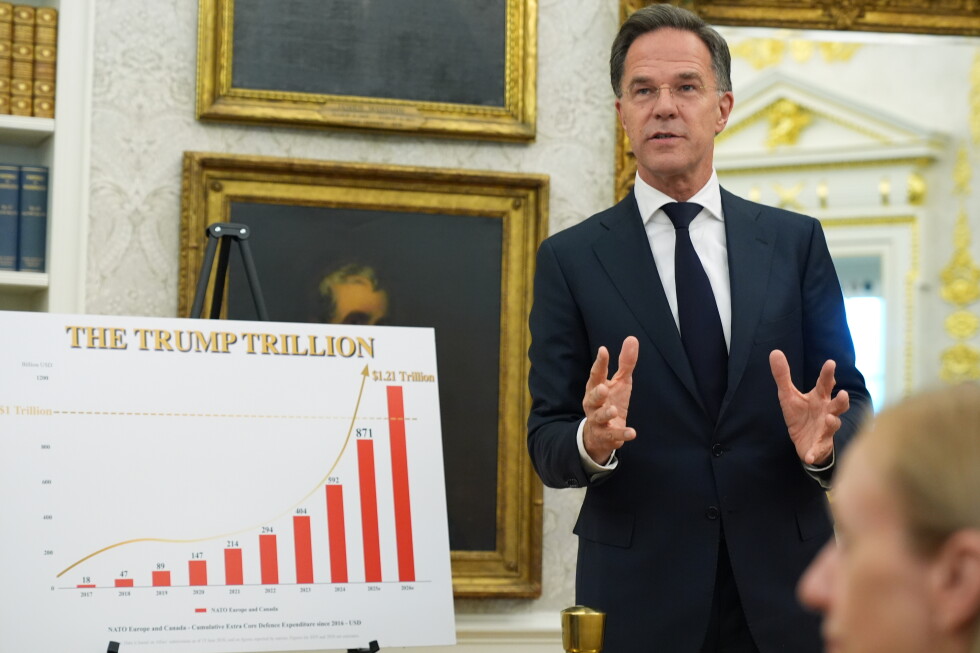
Since he started work as NATO secretary-general almost two years ago, Mark Rutte has spent much of his time trying to keep the United States anchored to the world’s biggest military alliance.
Sure, but those places would be in some kind of military alliance anyway, the Treaty of Brussels being the most obvious candidate. It’s also important to remember that they’d be overrun anyway; what’s keeping them safe is the threat of retaliation by the rest of NATO, but even at worst Central and Eastern Europe would be more than enough to provide that threat on their own. My point isn’t that a defensive alliance (mostly against Russia) is unnecessary, but that NATO is way, way too big to be only that. Countries like Spain and Britain aren’t part of NATO for mutual defense, because there’s nothing to defend them from.
You really need to look at WW2 history and the reason for NATO. Before WW2 every small country thought they could declare neutrality and sit out the next war: Belgium, Netherlands, Denmark, Norway, etc. And how did that turn out? Germany just picked them off one by one. Even the countries that tied to engage like Poland and Czechoslovkia were picked off one by one (or served up on a platter).
Read: This disjointed approach did not work at all. The solution? Get a defence alliance that actually came to everyone’s defence. And the earlier the better, countries like Spain and Britain are off fighting the war with functioning allies (yes even the small ones) and with control of the map rather than waiting for Russia to be at their doorstep. Think through WW2, would it have been better or worse for the allies if Norway and Denmark didn’t fall? It would have been a fuckton easier. Half the reason for NATO is to get the small countries in, not run over one by one, and contributing.
That’s a great example, and it illustrates clearly my point here: Russia aside, the era of intra-European wars of conquest is over. Germany isn’t going to declare a thousand years Reich over Poland, and neither will Italy pick more fights with the Balkans, at least for a generation or two. This is a result of European integration and has nothing to do with NATO per se. So really the only military threat to the Pax Americana in Europe is Russia, which as I said don’t require anything as big as NATO to stop it, so the question becomes “what’s in it for (for example) Britain.”
This leads us to my other point: Britain and France didn’t declare war in WWII because Germany was coming for them. Not that they shouldn’t have intervened, but that what they did was an intervention; they didn’t want Germany to have hegemony over continental Europe and so they declared war. The existence of the Allies wasn’t defensive. Similarly, any war Britain fights with Russia would be offensive, not defensive, because there’s no plausible reality where Russia tries to cross the English Channel. British participation in such a conflict would be to protect a status quo that serves its interests, not to preemptively defend British soil. This means it’d be wrong to say British is in NATO for defensive reasons; its membership in NATO is both unnecessary for its not-quite-stated goal (defending against Russian aggression) and this goal wouldn’t be any more defensive than America declaring the Gulf War on Iraq. There’s a lot more mutual back scratching to keep states not directly threatened by Russia in the alliance than just mutual defense, even if we assume that NATO’s primary goal is defending member states (which is certainly arguable considering NATO hasn’t conducted a defensive operation in its entire history).


Sure, but those places would be in some kind of military alliance anyway, the Treaty of Brussels being the most obvious candidate. It’s also important to remember that they’d be overrun anyway; what’s keeping them safe is the threat of retaliation by the rest of NATO, but even at worst Central and Eastern Europe would be more than enough to provide that threat on their own. My point isn’t that a defensive alliance (mostly against Russia) is unnecessary, but that NATO is way, way too big to be only that. Countries like Spain and Britain aren’t part of NATO for mutual defense, because there’s nothing to defend them from.
You really need to look at WW2 history and the reason for NATO. Before WW2 every small country thought they could declare neutrality and sit out the next war: Belgium, Netherlands, Denmark, Norway, etc. And how did that turn out? Germany just picked them off one by one. Even the countries that tied to engage like Poland and Czechoslovkia were picked off one by one (or served up on a platter).
Read: This disjointed approach did not work at all. The solution? Get a defence alliance that actually came to everyone’s defence. And the earlier the better, countries like Spain and Britain are off fighting the war with functioning allies (yes even the small ones) and with control of the map rather than waiting for Russia to be at their doorstep. Think through WW2, would it have been better or worse for the allies if Norway and Denmark didn’t fall? It would have been a fuckton easier. Half the reason for NATO is to get the small countries in, not run over one by one, and contributing.
That’s a great example, and it illustrates clearly my point here: Russia aside, the era of intra-European wars of conquest is over. Germany isn’t going to declare a thousand years Reich over Poland, and neither will Italy pick more fights with the Balkans, at least for a generation or two. This is a result of European integration and has nothing to do with NATO per se. So really the only military threat to the Pax Americana in Europe is Russia, which as I said don’t require anything as big as NATO to stop it, so the question becomes “what’s in it for (for example) Britain.”
This leads us to my other point: Britain and France didn’t declare war in WWII because Germany was coming for them. Not that they shouldn’t have intervened, but that what they did was an intervention; they didn’t want Germany to have hegemony over continental Europe and so they declared war. The existence of the Allies wasn’t defensive. Similarly, any war Britain fights with Russia would be offensive, not defensive, because there’s no plausible reality where Russia tries to cross the English Channel. British participation in such a conflict would be to protect a status quo that serves its interests, not to preemptively defend British soil. This means it’d be wrong to say British is in NATO for defensive reasons; its membership in NATO is both unnecessary for its not-quite-stated goal (defending against Russian aggression) and this goal wouldn’t be any more defensive than America declaring the Gulf War on Iraq. There’s a lot more mutual back scratching to keep states not directly threatened by Russia in the alliance than just mutual defense, even if we assume that NATO’s primary goal is defending member states (which is certainly arguable considering NATO hasn’t conducted a defensive operation in its entire history).