
2·
7 days agoAgree, grip of the lock-in is sitting tight … But as you mentioned, its less the lack of software than it is path dependencies.
Agree, grip of the lock-in is sitting tight … But as you mentioned, its less the lack of software than it is path dependencies.
In LibreOffice you can code marcos using Python. The actual problem is cross compatibility ( while its possible to execute VBA in LibreOffcie
Yes, this would work — but it comes with a subtle statistical bias: the character ‘W’ ends up underrepresented. With a naïve “avoid COW” approach, only about 25% of the grid will typically be ‘W’.
A more elegant solution would be:
That keeps the distribution much closer to uniform while still guaranteeing a valid puzzle. Then just insert the single “COW” manually wherever you want the hidden solution to be.
s= (320,180)            #size
m=rand(['C','O','W'],s) #random init
c=1
while c>0      #iterate till solved
    c=0
    for i in 1:first(s)
        for j in 1:last(s)

            #check for 'COW' in each cluster of 3 and copy a character
            #from a rendom cell to an other random cell of the cluster if found

            if i>2 &&  m[i-2:i,j] ==['C','O','W']   #vertical
                c +=1
                r =shuffle([1,2])
                m[i-r[1],j] = m[i-r[2],j]
            end
            if j>2 && m[i,j-2:j]  ==['C','O','W']   #horizontal
                c +=1
                r =shuffle([0,1,2])
                m[i,j-r[1]] = m[i,j-r[2]]
            end
        end
    end
end
The neat part is that this preserves an almost perfectly balanced character frequency.
For comparison, the puzzle in the example image seems to contain roughly:
C: ~260 (~25%) O: ~520 (~50%) W: ~244 (~25%)
So the original author clearly used a different generation strategy.
Possibly on purpose: visually, ‘C’ and ‘O’ are much easier to confuse than ‘W’. Reducing the number of 'W’s therefore increases the search difficulty. In that sense, the approach suggested by @[email protected] is probably preferable: keep the distribution mostly balanced, but intentionally bias it just enough to make the puzzle psychologically annoying.
I wonder if there is a non iterative way to generate this puzzle with a ‘uniform’ character distribution 🤔
Right the brackets … and functional notation…
Just had a quick read on wikipedia s order of operations an now I know why I can not remember any more… Every peace of software does its own Thing so one can not relay on conventions.
Have a PhD in physics and this is the first time that I hear of some kind of “order” here. May be I forgot but I only remember that I used associative, distributiveand commutative properties of mathematical objects.

They did it during daylight so there are no black holes involved. The stuff is coming from the sun. Anyway, still funny pictures

“Thermal reuse” or “thermal utilization” is how its actually called.
I think it is often simply burned to generate heat/electricity

Equating the Donbas conflict to Gaza ignores the presence of Russian regular forces and proxies documented since 2014 or so. Ukraine was defending its borders against an insurgency backed by a foreign power. In this localized conflict both sides broke ceasefires multiple times.
Why is the encroachment story a reason for invasion? This move actually pushed Finnland in to Nato. If the invasion should have been a move against Nato it wasn’t a smart one
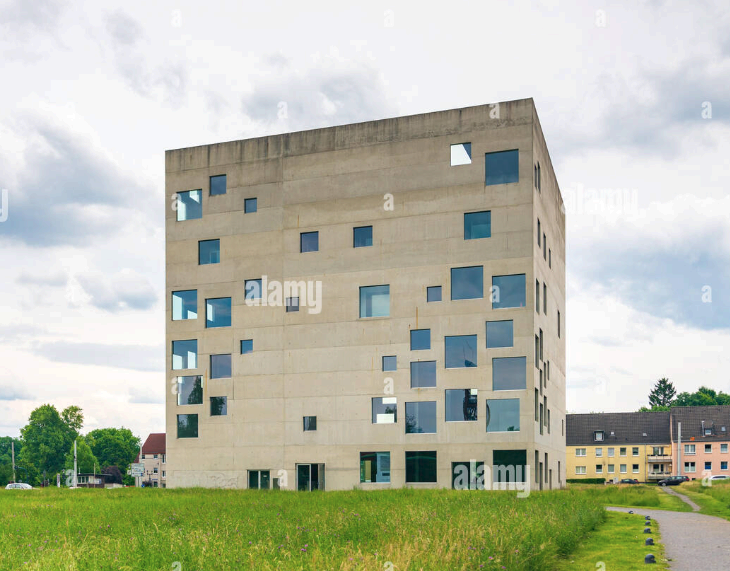
Well, at least thy were trying, whil other archtiects just use the rnd() function for placement:
The isolation Russia is a direct response to the 2022 invasion. Before that, Russia was a member of the G8, a massive / main energy partner to Europe, and widely integrated into the global economy. Those bonds where cut after the invasion, not before.
Regarding you second question: I don’t see many other options for the Ukrainian government. The tragedy of forced mobilization on both sides is clear, but the responsibility for that tragedy is by the party that made mobilization necessary in the first place.
No I do not suffer from a phobia against Russians, or I’m not aware of that. Actually, the most ‘Russophobic’ thing one could do is support a regime that sends thousands of its young men to die in a neighbor territory and isolates the country from the global economy. I am not against Russians in general, I am against the policies that are currently destroying Russia’s reputation and its future.
No idea, but lot of “leaders” nowerdays aim in to that direction. So there must be something I can not see…
Raging fury and nothing but negativity… Who has internalized hate?
Why is it trivialization of the nazis when saying the Russians perform low in UA? .
deleted by creator
Removed by mod
I don’t miss you already…
And you’re humus.

Not sure about the mailage of the voyager probes (wikipedia states a distance from death of 16billion mi) an they also have batteries with them. Does this count?🤔