
- 53 Posts
- 13 Comments

 681·1 month ago
https://windows93.net/ - Some mad lad implemented a custom parody version of Windows 95 that has a bunch of working applications and emulators. Also, check out [email protected] for a lot of similar sites.

I think we generally agree with each other. The existence of an omniscient AI or deity doesn’t change the “experience” of free will. It doesn’t “invalidate choice” from the point of view of the observed. It does “invalidate choice” from the point of view of the observer, who can now say “This thing exhibits no unpredictable behavior to me”. You and I both think we have free will, because we can’t predict our own behavior. Our experience is unchanged, whether or not some other observer exists or could exist that could predict our behavior.
Agreeing on a frame of reference is exactly my point. “Does something have free will?” requires the follow-up question, “According to whom?”. Just like “I’m far from that rock” requires the followup question, “According to whom?”. The ant might think you’re far from the rock, something else might think you’re near the rock.
To boil it down a bit more, my point is just that you can always replace the phrase “free will” in speech with “unpredictable behavior” without loss of meaning, because that is what people actually mean when they say it, whether they realize that or not.
We’re not “relieved” of free will. It’s not an intrinsic property that one “has”. It would be like having “big” or “near”. You don’t “have” big, it’s a relative term.
It’s simply a description of observed behavior. That’s all it really is in the end, even though people treat it as this super mysterious thing.
Why not? It might seem absurd, but can you prove they don’t “choose” to flit about here or there? A super-intelligent AI might also be able to “pierce the veil” and determine the underlying mechanics, like a video game character determining the math behind the random number generator that powers their world.
That’s also only one interpretation of quantum mechanics, mechanistic interpretations aren’t ruled out (though a number of variants have been).
Free will is incompatible with omniscience. People really want it to work, but it doesn’t.
Free will is observer-dependent, and is short for “I can’t predict the behavior of this thing”. For an omniscient observer, there is no thing that it can say that about.
Free will is not an inherent property of a thing, and that’s what trips people up so much.
To ponder it a bit, does a rock have free will? A dog? A human? A super-intelligent AI that we can’t hope to comprehend? Why or why not for each step?
The definition above explains it all. Of course a rock doesn’t, we can predict its behavior with physics! Maybe a monkey does, people disagree on that. Of course human do though, because I do!
Now ponder what the super-intelligent AI would think. “Of course the first three don’t have free will, their behavior is entirely predictable with physics”
This boils down to the best of all possible worlds argument, already well-skewered in Candide centuries ago.
Why create the world exactly the way it was? Is it impossible to create it, so that of their own free will, one more person makes the “right” choice? That’s some sorry omnipotence if so. If not one person, why not two? And so on, until you face the question of, “Why not create the world so that everyone, of their own free will, makes the ‘right’ decision”.
Calvinists are intellectually brave enough to accept the metaphysical consequences of their beliefs. Others, not so much.
What jurisdiction? In the US, factual information that you simply compile likely isn’t copyrightable, there’s been some court cases about e.g. telephone books:
https://en.wikipedia.org/wiki/Feist_Publications,_Inc._v._Rural_Telephone_Service_Co.
Won’t stop big companies from harassing you if they feel like it, though. Nintendo is petty enough that they might
Yeah, turns out a lot of companies don’t really think about security, here’s a DEF CON talk where they find stuff that chokes on it:

That sort of exists:
https://en.wikipedia.org/wiki/EICAR_test_file
X5O!P%@AP[4\PZX54(P^)7CC)7}$EICAR-STANDARD-ANTIVIRUS-TEST-FILE!$H+H*
Plug for the [email protected] community I started to celebrate the creative commons and public domain. I’ve been posting the wikimedia picture of the day there daily, and other sorts of posts including questions like this are very welcome!
Lemmy just released 0.19.14, which addresses this somehow, but the announcement is vague:
https://join-lemmy.org/news/2025-12-08_-_Lemmy_Release_0.19.14
https://discuss.online/post/31855056
Recently some malicious users started to use an exploit where they would post rule violating content and then delete the account. This would prevent admins and mods from viewing the user profile to find other posts, and would also prevent federation of ban actions.
The new release fixes these problems. Thanks to @flamingos-cant for contributing to solve this.
Related to the title text, some people are into that sort of thing:
Phantom time conspiracy theory is a pseudohistorical conspiracy theory first asserted by Heribert Illig in 1991. It hypothesizes a conspiracy by the Holy Roman Emperor Otto III and Pope Sylvester II to fabricate the Anno Domini dating system retroactively, in order to place them at the special year of AD 1000, and to rewrite history to legitimize Otto’s claim to the Holy Roman Empire. Illig believed that this was achieved through the alteration, misrepresentation and forgery of documentary and physical evidence. According to this scenario, the entire Carolingian period, including the figure of Charlemagne, is a fabrication, with a “phantom time” of 297 years (AD 614–911) added to the Early Middle Ages.

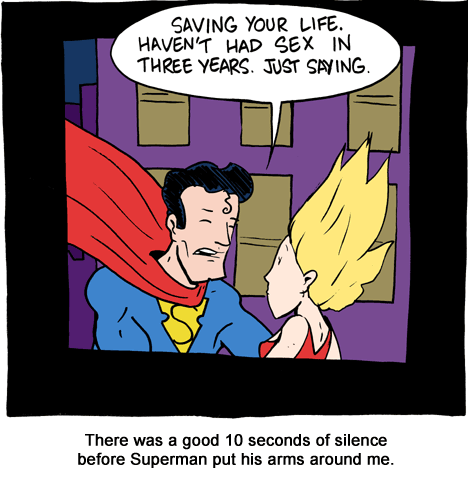

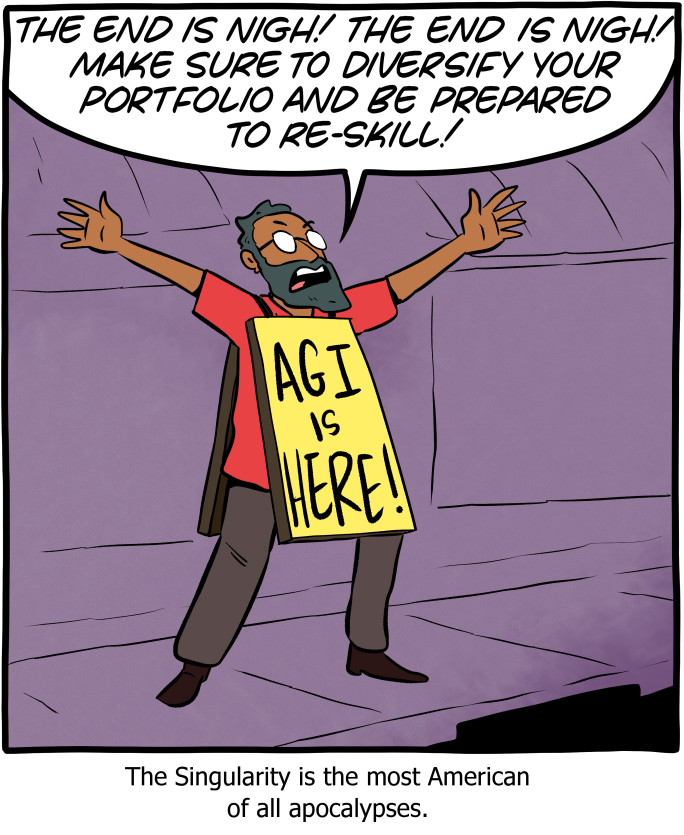
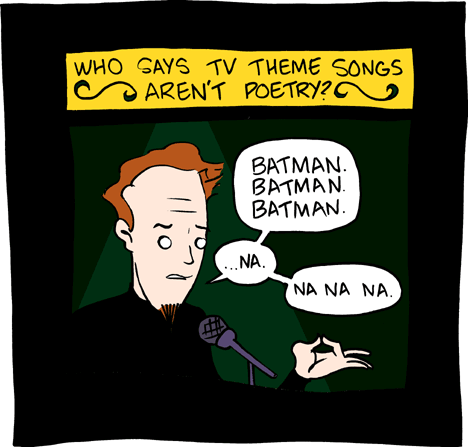
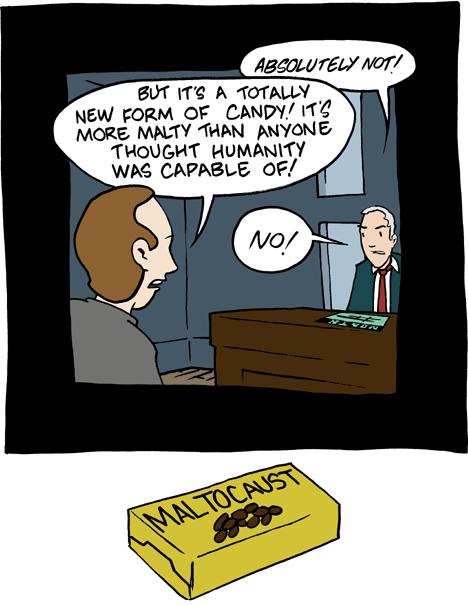
As an artist? If so, do you have a link?