
• 4 Posts
  • 15 Comments
Joined 3 years ago
cake
Cake day: August 29th, 2023

help-circle

  • Thank you for letting me know your thoughts!

    Automatic semicolon inference has a very big language footprint, similar to the range syntax that the author disliked.

    Maybe not “very big”, but I agree with your point in principle.

    The reason why I think it is worthwhile (compared to e. g. range syntax) is that we are paying for it anyway already:

    Good error reporting hinges on parsing not strictly the language that’s defined, but understanding the language that people actually write – and people forget ; all the time.

    So from my POV I’m turning an error reporting step (that I’d have to implement anyway) into something more useful.

    For this feature to be useful, it has to be at least powerful enough to replace format!

    To be honest, if all the fancy formatting stuff requires a macro, so be it.

    I just don’t want to need macros for creating a list and so on.
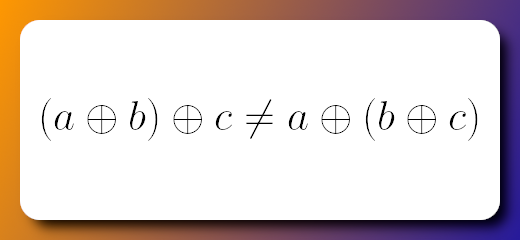


  • The point I’m trying to make is that this is a very incomplete article, as it doesn’t seem that much thought was put on the downsides.

    I could mentioned additional points in favor for the same reason you mentioned your points against, but at some point one has to stop and decide whether any minor, additional points made would sway the overall verdict.

    Many of the most popular languages have both modifiers and annotations:

    I have a separate blog post in which I consider when “popularity” or “familiarity” should be considered when it comes to language design.

    C doesn’t have both because it doesn’t even have annotations. Idk about C++, but it either doesn’t have annotations (like C)

    Both C and C++ have annotations. They are called “attributes” in their language, as mentioned in the footnote linked from the blog post’s first sentence.

    People genuinely don’t believe this to be an issue. The closest is public static int main() for java.

    If you look at Java-inspired languages like Scala or Kotlin, neither of them have public (made the default) nor static (replaced by companion objects).


  • Ok, then here’s a short answer to your points:

    Aesthetics. Annotations are just uglier than modifiers. Due to their special syntax instead of just a naked keyword.

    If the language has annotations already, then you have paid the tax of having “special syntax” in your language in any case.
    (Except Swift maybe, which has “attributes” and more than 200 keywords.)

    Annotations take up more space

    I don’t consider this a drawback. In fact, many languages with modifiers have the same rules about modifier placement.
    I actually want annotations on their own line, such that all my actual keywords start at the same column.

    Disorder

    Many languages with modifiers have the exact same issue, and address the issue the same way I’d address it for annotations:
    Define a desired order of annotations and let the compiler/linter/IDE/formatter deal with it.

    Downgrading

    Let the IDE/editor pick a different color for you “more important” annotations, if you like.

    “your language should not have modifiers, do annotations instead” instead of “if your language has both, remove modifiers”

    That’s just nitpicking the wording. Ok.

    Namespacing … is not objectively better. I don’t want to import “public” in every single file.

    Then don’t? Most languages don’t make you import String either.

    Namespacing … Or even worse, a non-annotation (function, class) named “public”.

    Have a separate namespace for for annotations, or treat @ as part of the name.
    Though it’s not something I would spend effort on – sometimes the best answer to “X does not work” is “then don’t”.

    Variable declarations do have modifiers too (for example “const” in C).

    I replaced …

    const foo: Foo = ...
    

    … with …

    @constantValue
    let foo: Foo = ...
    

    … in my language a short while ago. It’s fine.


  • I believe that if you start from an annotation-only stance, then you will look at the language, its defaults and possible extensions differently, because annotations are “visually” more expensive than slapping yet-another keyword on something.

    I. e.:

    • “no visibility modifier” should probably mean “public”
    • defining the external API should move to the module-level altogether
    • we should probably use var instead of let mut
    • #[cfg(target_os = "windows")] is just bad design overall
      instead put different targets into different folders: much easier, works better
    • async should not exist at all
      (though not related to annotations vs. modifiers, but because the whole idea is a language design dead-end)


    So the code from your example would literally be …

    fun some_func: Unit = {
        var my_var = 3u2
        // ...
    

    … in my design.

    Rust’s syntax with #[...] is not that great in this regard, as it triples the amount of symbol involved for simple annotations compared to something using @....