• 21 Posts
  • 16 Comments
Joined 3 years ago
cake
Cake day: June 1st, 2023

help-circle

  • I have worked on open source projects. I cannot fork sheer number of projects going towards LLMs alone. This is a losing proposition. Open source is not an individualistic action. This is a collective action, and we need developers of open source to live the values of open source

    someone else can pick up from here

    A big point of my comment earlier was that making a project increasingly LLM generated makes it harder for someone to pick up as quickly. A huge amount of complexity can be added insanely fast. In this rsync example, the entire testing system was changed overnight (while generating issues in the process). The projects become harder to work on in general

    EDIT: also to add, this still has the issues of not knowing where the un-copyleftable code lies and/or having to rework large portions of the project are if you want to keep that



  • That framing is missing a lot. Open source software is way more than about using the code. For me, it is not the bugs and quality that concern me most about things like this (though I do have concerns with that too). It’s about the broader issues with LLMs in terms of cooperate power, environmental impact, etc. Calling it out is less about any one project and more about stopping the whole open source ecosystem from spiraling into an LLM-dependent mess. LLMs themselves can easily become the death of FOSS in a broader sense

    LLMs flip the power dynamics of development on their head. For starters, the outputs are likely no longer copyrightable in many jurisdictions, which undermines copyleft licenses (rsync is under GPL for example).

    The kind of code that LLMs generate also tend to add complexity rather fast where it becomes more and more difficult for any human to understand it. Becoming dependent on LLMs makes development more of a question of computing power rather than effort. Companies will be able to spend more than you. FOSS will not be able to compete nearly as well. It’s also an inherent dependency on big tech companies who will be happy to exploit that the second they can or cut you off it you start to hit their bottom line. Software cannot be free in terms of freedom if modifying it in a reasonable amount of time starts to almost require a tool controlled by someone else

    Using “Open Source” (which has somehow become “public weights” to most) / local LLMs are hardly freedom from this either given that they will always be behind given the massive financial costs to make models, unlike traditional software. If you find any advantage or way to reduce resource usage to make a better model, the bigger tech companies will just quickly scale that up far bigger than you can and meet or exceed what you have. It still just as well makes your ability to modify software dependent on the hardware you have. How free is open source software if it becomes increasingly difficult to modify without an expensive GPU?


  • So if i created my own keyboard from scratch on a open hardware microcontroller, could i implement this?

    The USB controller that interrupts the CPU lives on the other side of the connection, so you’d just be building hardware that responses to the polling. If you’re curious what that looks like, Ben Eater has a cool video looking at what that looks like for a USB 2 keyboard https://youtu.be/wdgULBpRoXk

    There’s also the case of Bluetooth dongle keyboards not working in UEFI (except that one) but USB always do. Is it this or just the UEFI not having drivers?

    I am no USB Keyboard expert, but through the power of looking it up it seems like most of these do not operate as a HID (human interface device, like mouse and keyboard) so need driver support, but some start up with a basic HID proxy which might be you have one that works. From an older thread about BIOSes rather than UEIFs

    A keyboard using Bluetooth cannot access the BIOS. Logitech Bluetooth keyboards get around this by having a dongle that pairs with the keyboard in a more basic, non-Bluetooth mode until the driver kicks in and switches modes. Microsoft might be similar mode with their keyboards and dongles, but I cannot confirm that.

    https://superuser.com/questions/242457/use-a-bluetooth-keyboard-to-access-edit-the-bios


  • Technically, interrupts are still often involved… just from the USB controller on the state of the polling instead of the keyboard directly on a keypress


    Some keyboards implement the USB Boot Keyboard profile specified in the USB Device Class Definition for Human Interface Devices (HID) v1.11 and are explicitly configured to use the boot protocol. These are limited to 6-key rollover (6KRO) and will interrupt the CPU every time the keyboard is polled (even if there is no state change) unless the USB controller is programmed to tell the keyboard to respond with negative acknowledgments, which the USB controller discards in hardware without interrupting the CPU, when there are no state changes to report

    https://en.wikipedia.org/wiki/USB_human_interface_device_class#Keyboards


  • Starting this off with: I am not an epidemiologist and most of the epidemiologist I’m seeing online aren’t yet too concerned

    That being said, they have not found any rodents on the ship, though that does not mean they didn’t just miss them in their search. The version on the ship has been confirmed to be the Andes Virus (ANDV) which is human-to-human transmissible in a way that most hantavirus are not

    It’s hard to say exactly how the virus will behave outside of a cruise ship (which are known for spreading diseases more than other locations), but we can potentially look at a past outbreak in 2018 in a small town for an idea

    In this work, we described the isolation of the strain responsible for the largest ANDV PTP transmission outbreak, which occurred in the small town of Epuyén and began on November 2, 2018. This strain, ARG-Epuyén, exhibited a high capacity for PTP transmission, necessitating the implementation of quarantine measures to curtail further spread [8]. The median reproductive number (the mean number of secondary cases caused by an infected person) was 2.12 before control measures were implemented and subsequently dropped to below 1.0 by late January

    https://pmc.ncbi.nlm.nih.gov/articles/PMC12201636/


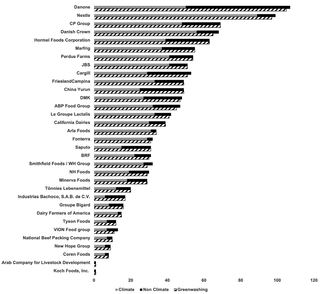
  • This is mostly greenwashing and false hype by the beef industry with misleading numbers

    What’s more, feeding cattle algae is really only practical where it’s least needed: on feedlots. This is where most cattle are crowded in the final months of their 1.5- to 2-year lives to rapidly put on weight before slaughter. There, algae feed additives can be churned into the cows’ grain and soy feed. But on feedlots, cattle already belch less methane—only 11 percent of their lifetime output

    […]

    Unfortunately, adding the algae to diets on the pasture, where it’s most needed, isn’t a feasible option either. Out on grazing lands, it’s difficult to get cows to eat additives because they don’t like the taste of red algae unless it’s diluted into feed. And even if we did find ways to sneak algae in somehow, there’s a good chance their gut microbes would adapt and adjust, bringing their belches’ methane right back to high levels.

    […]

    All told, if we accept the most promising claims of the algae boosters, we’re talking about an 80 percent reduction of methane among only 11 percent of all burps—roughly an 8.8 percent reduction total

    https://www.wired.com/story/carbon-neutral-cows-algae/