I think the difference is historically hobbies involved making things (woodworking, model building, sewing, playing music, drawing, writing, scrapbooking, etc.) or were purely physical (hiking, playing sports, shooting things, etc.) partly out of necessity due to home media being practically nonexistent outside of books and magazines which require literacy (a high bar up to about the 20th century)
Within about one generation we went from books and magazines being the only mass market home media to suddenly having access to more home media than we could ever consume. My grandmother has told me about her family getting their first TV and how she imagined it would be like a radio with a little screen you could walk up to and see a static image depicting what’s being described when you wanted to but would otherwise listen to like radio
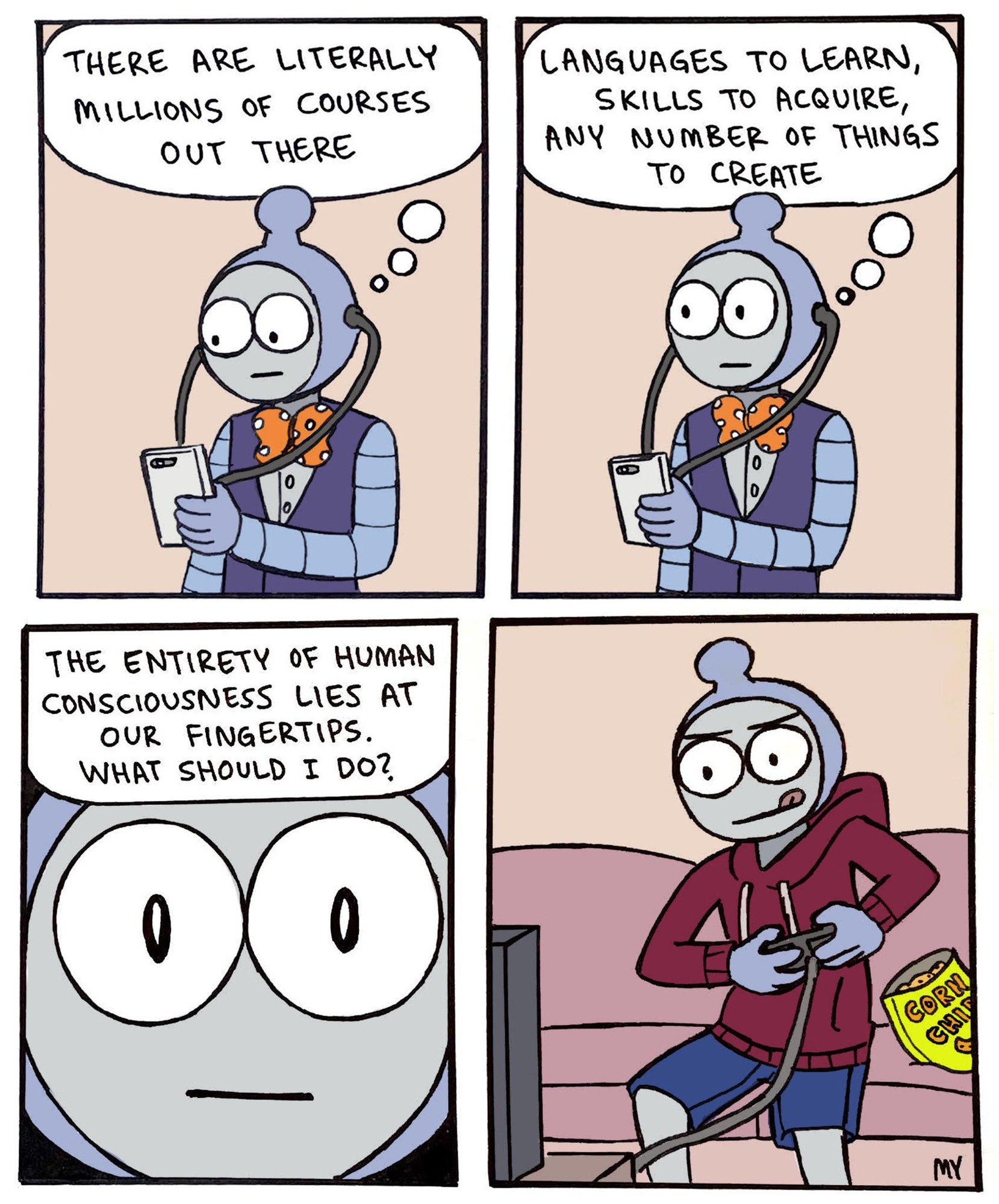
People are now by default consumers, where even just 50 years ago it was still the default for people to make stuff, fix stuff, etc. at home. Boredom drove skill building, now boredom just drives consumption. To make matters worse, mass digitization ultimately came in the form of smartphones with apps powered by addictive algorithms, so people (myself included) are addicted to the cheap dopamine that these screens of colorful lights provide us. This is the crux of the matter, and there’s a growing trend (partly driven by enshitification) of de-digitizing as people realize how bad these screens are for our mental health
I’m with you there, the lack of boredom-based drive and opportunities, and the constant distracting dopamine drip feed, are real things. At least in the circles I’ve found myself in, it’s been really cool to see so many people picking up on that and making deliberate efforts to avoid over-convenience and constant low effort entertainment. Lots of people ditching smartphones, adopting the “treat the internet as a place you go instead of a constant presence” philosophy, setting up their own websites and homeservers, people getting into more non-digital tools and hobbies, and stuff like that. It’s been a great source of hope and optimism for me in these wild times


I think the difference is historically hobbies involved making things (woodworking, model building, sewing, playing music, drawing, writing, scrapbooking, etc.) or were purely physical (hiking, playing sports, shooting things, etc.) partly out of necessity due to home media being practically nonexistent outside of books and magazines which require literacy (a high bar up to about the 20th century)
Within about one generation we went from books and magazines being the only mass market home media to suddenly having access to more home media than we could ever consume. My grandmother has told me about her family getting their first TV and how she imagined it would be like a radio with a little screen you could walk up to and see a static image depicting what’s being described when you wanted to but would otherwise listen to like radio
People are now by default consumers, where even just 50 years ago it was still the default for people to make stuff, fix stuff, etc. at home. Boredom drove skill building, now boredom just drives consumption. To make matters worse, mass digitization ultimately came in the form of smartphones with apps powered by addictive algorithms, so people (myself included) are addicted to the cheap dopamine that these screens of colorful lights provide us. This is the crux of the matter, and there’s a growing trend (partly driven by enshitification) of de-digitizing as people realize how bad these screens are for our mental health
I’m with you there, the lack of boredom-based drive and opportunities, and the constant distracting dopamine drip feed, are real things. At least in the circles I’ve found myself in, it’s been really cool to see so many people picking up on that and making deliberate efforts to avoid over-convenience and constant low effort entertainment. Lots of people ditching smartphones, adopting the “treat the internet as a place you go instead of a constant presence” philosophy, setting up their own websites and homeservers, people getting into more non-digital tools and hobbies, and stuff like that. It’s been a great source of hope and optimism for me in these wild times