I’ve not yet played divinity 2, currently playing baldur’s gate 3 for the first time and really enjoying it. So I’m actually kind of excited for divinity 3. Looks like it’s a couple of years away anyway tho.
I played Original Sin 2 after BG3, and at first it leaves a huge positive impression, but then more and more problems present themselves as time goes on. The armor systems create stunlocking issues; the XP system encourages genocide; the skill system feels freeing at first but ends up landing on dominant strategies very quickly. It’s still a good game, and they’ve said in an AMA that some of my biggest criticisms won’t be in this new Divinity, but their track record thus far is that their own RPG systems are not as good as 5e.
Divinity might also be closer than you think. If they go early access, which they haven’t committed to, we might be playing it next year.
Really? Well that sounds mostly good news to me! Early access divinity would be exciting. And yeah, I know divinity 2 is an older game, I’m expecting to have some issues with it but I’ll certainly give it a try.
TBH baldur’s gate 3 has been the first game of this type I’ve played. Was never into D&D stuff, so I’m not really aware of what could be better or different. I’m only just now learning that I enjoy games like this!
Nice! If you got used to your ability to “use X on Y” to solve problems creatively, that’s Larian’s special sauce, so unfortunately, you’re unlikely to find that kind of depth in any other video game besides those last two Divinity: Original Sin games. As far as the combat and skill dice rolls go though, there are definitely plenty more of those.
Functionally it kind of just removes the curtain and reveals how effective health points (EHP) vs total health points actually works. But God it felt really shit to actually play. It goes against gaming convention.
While BG3 was a better game, the combat in Divinity was more fun. Not only was cheese encouraged, it was almost required at higher difficulty levels. Summoning a lava worm to shoot a laser beam at some tossed out fire traps to cause a million damage? Sure, why not?
While BG3 was a better game, the combat in Divinity was more fun. Not only was cheese encouraged, it was almost required at higher difficulty levels.
Its so interesting how differently people view things, that sounds horrible to me (and matches my short experience with d:os). I want a game that has hard difficulty that I can beat by making smart decisions, not figuring out how to break the underlying system.
5e is a great system for a “Rule of Cool” style of DMing. That’s amazing for a decent DM and inexperienced/less technical players.
But it is not a good CRPG system or a good system for experienced and technical players. There’s a lot of “can I…” and “I want to…” that slows down combat even when you know the rules.
Plus, there’s stuff like “can a centaur ride a horse?” where 5e is inconsistent. Or the infamous peasant rail gun.
5e is a great system for a “Rule of Cool” style of DMing. That’s amazing for a decent DM and inexperienced/less technical players.
It’s not even that good at that. Fate, for example, is a much lighter and better system for that. Aspects are a very simple system for setting expectations and letting players do wacky things based on them.
If I was going to run a game for new players I would absolutely not reach for 5e. It provides too much fertilizer for “can I move that far?” and “if he’s flying 30’ up can I still shoot him?” minutia.
Yeah to me 5e is in a weird place right now. Not quite narrative focused and not quite crunchy numbers focused either. It’s like a middle ground where some parts are highly specific but others are left to interpretation. I’ve found people mostly get confused by this ambiguity.
I probably had fewer “can I…?” questions in BG3 than any other CRPG, if for no other reason than that all of the enemy attributes are exposed at all times, and your spells tell you which attributes they interact with. It’s that same quality that allows the technical design of Larian’s engine to shine, and it made large swaths of the genre feel dated immediately. Either in the video game or the tabletop, my combats don’t have many questions to bog them down.
I disagree. It’s a poorly designed system that fails at accomplishing anything better than alternatives. The thing it has going for it is the name/marketing. There are lighter systems that are easier and cooler, there are heavier systems that are more tactical, and there are equivalent systems that are less jank. The fact that there’s things like the bonus action, that was added so late in development it was never playtested, in 5e makes it pretty awful to play. There are so many exceptions you have to learn to even start too. It’s not a good system for noobs and it’s not a good system for experienced players.


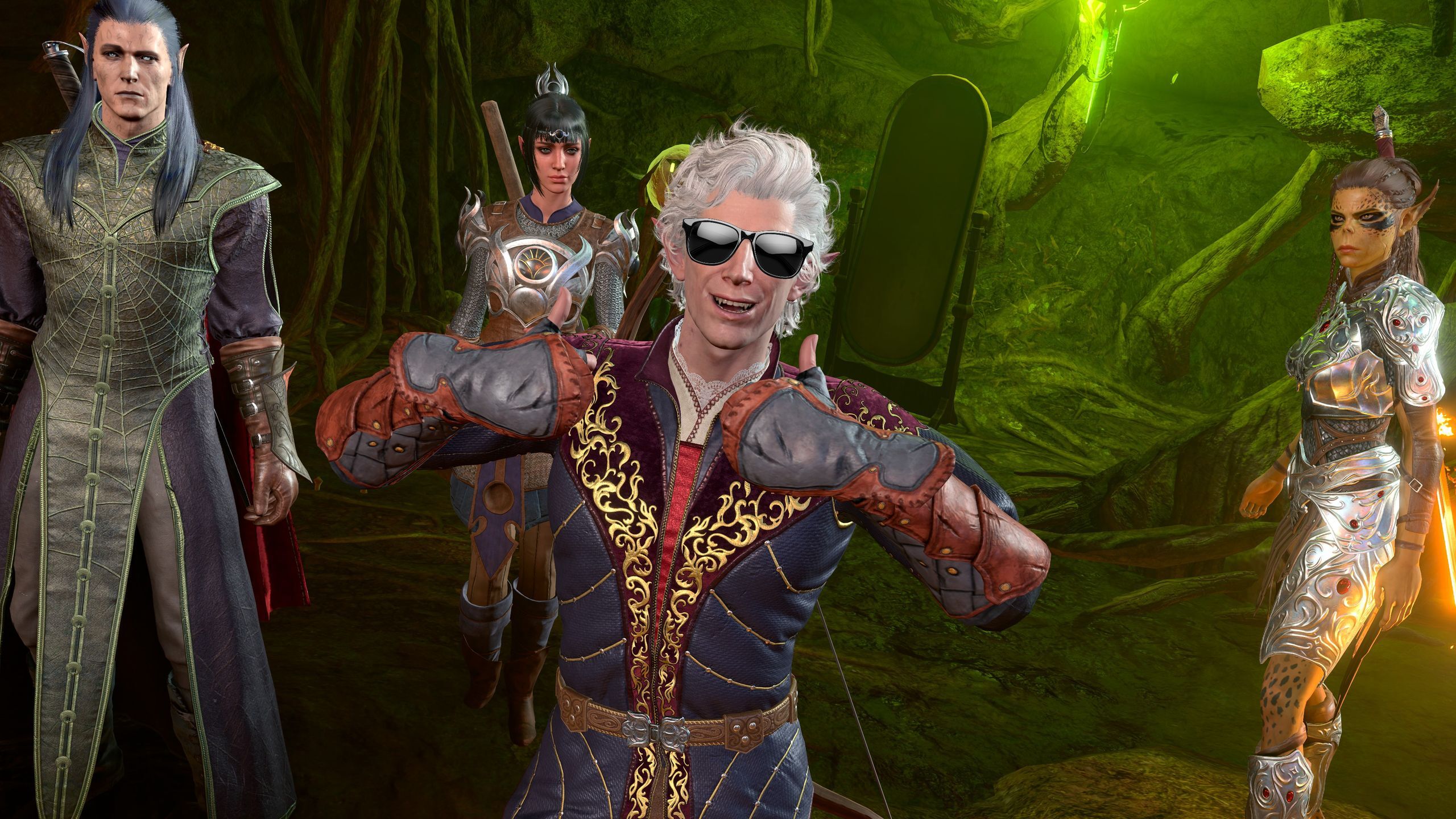
It’s among my favorites, and I’m nervous for whatever Divinity’s got in its place.
I’ve not yet played divinity 2, currently playing baldur’s gate 3 for the first time and really enjoying it. So I’m actually kind of excited for divinity 3. Looks like it’s a couple of years away anyway tho.
I played Original Sin 2 after BG3, and at first it leaves a huge positive impression, but then more and more problems present themselves as time goes on. The armor systems create stunlocking issues; the XP system encourages genocide; the skill system feels freeing at first but ends up landing on dominant strategies very quickly. It’s still a good game, and they’ve said in an AMA that some of my biggest criticisms won’t be in this new Divinity, but their track record thus far is that their own RPG systems are not as good as 5e.
Divinity might also be closer than you think. If they go early access, which they haven’t committed to, we might be playing it next year.
Really? Well that sounds mostly good news to me! Early access divinity would be exciting. And yeah, I know divinity 2 is an older game, I’m expecting to have some issues with it but I’ll certainly give it a try.
TBH baldur’s gate 3 has been the first game of this type I’ve played. Was never into D&D stuff, so I’m not really aware of what could be better or different. I’m only just now learning that I enjoy games like this!
Nice! If you got used to your ability to “use X on Y” to solve problems creatively, that’s Larian’s special sauce, so unfortunately, you’re unlikely to find that kind of depth in any other video game besides those last two Divinity: Original Sin games. As far as the combat and skill dice rolls go though, there are definitely plenty more of those.
That’s a controversial opinion but I agree with you. Going by the Original Sin games I prefer 5e over the rules Larian made for Divinity.
The surfaces system was superior in Divinity OS2 but I felt the physical/magical armor system was kind of awkward.
Functionally it kind of just removes the curtain and reveals how effective health points (EHP) vs total health points actually works. But God it felt really shit to actually play. It goes against gaming convention.
While BG3 was a better game, the combat in Divinity was more fun. Not only was cheese encouraged, it was almost required at higher difficulty levels. Summoning a lava worm to shoot a laser beam at some tossed out fire traps to cause a million damage? Sure, why not?
Its so interesting how differently people view things, that sounds horrible to me (and matches my short experience with d:os). I want a game that has hard difficulty that I can beat by making smart decisions, not figuring out how to break the underlying system.
I like ridiculous things to happen. I also hate misses in any game. That’s too realistic for me.
Given how much more likely one is to have played 5e than any other system, it’s probably not all that controversial.
5e is a great system for a “Rule of Cool” style of DMing. That’s amazing for a decent DM and inexperienced/less technical players.
But it is not a good CRPG system or a good system for experienced and technical players. There’s a lot of “can I…” and “I want to…” that slows down combat even when you know the rules.
Plus, there’s stuff like “can a centaur ride a horse?” where 5e is inconsistent. Or the infamous peasant rail gun.
It’s not even that good at that. Fate, for example, is a much lighter and better system for that. Aspects are a very simple system for setting expectations and letting players do wacky things based on them.
If I was going to run a game for new players I would absolutely not reach for 5e. It provides too much fertilizer for “can I move that far?” and “if he’s flying 30’ up can I still shoot him?” minutia.
Yeah to me 5e is in a weird place right now. Not quite narrative focused and not quite crunchy numbers focused either. It’s like a middle ground where some parts are highly specific but others are left to interpretation. I’ve found people mostly get confused by this ambiguity.
I probably had fewer “can I…?” questions in BG3 than any other CRPG, if for no other reason than that all of the enemy attributes are exposed at all times, and your spells tell you which attributes they interact with. It’s that same quality that allows the technical design of Larian’s engine to shine, and it made large swaths of the genre feel dated immediately. Either in the video game or the tabletop, my combats don’t have many questions to bog them down.
I disagree. It’s a poorly designed system that fails at accomplishing anything better than alternatives. The thing it has going for it is the name/marketing. There are lighter systems that are easier and cooler, there are heavier systems that are more tactical, and there are equivalent systems that are less jank. The fact that there’s things like the bonus action, that was added so late in development it was never playtested, in 5e makes it pretty awful to play. There are so many exceptions you have to learn to even start too. It’s not a good system for noobs and it’s not a good system for experienced players.